If you've cut back on caffeine, you've probably stood in the coffee aisle wondering whether "decaf" and "caffeine-free" mean the same thing. They don't, and the difference matters if you're sensitive to caffeine, want a cup in the evening, or are trying to cut caffeine out completely.
This guide explains how decaf is made, how much caffeine it can still contain, what "caffeine-free" really means, and a few cozy caffeine-free drinks for long winter evenings and holiday get-togethers.
Decaf vs caffeine-free: the short answer
-
Decaf coffee is regular coffee that has had most of its caffeine removed. It still contains some caffeine.
-
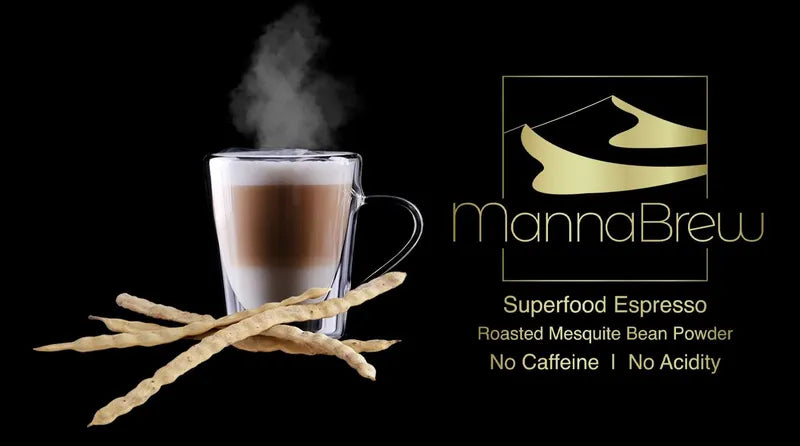
Caffeine-free drinks never had caffeine in the first place. Examples include most herbal teas, rooibos, and roasted coffee alternatives such as MannaBrew, which is made from roasted mesquite seed pods.
So "decaf" means less caffeine, while "caffeine-free" means none.
How much caffeine is in decaf?
According to the U.S. Food and Drug Administration, decaf coffee typically has 2 to 15 milligrams of caffeine in an 8-fluid-ounce cup. For comparison, the FDA lists regular brewed coffee at roughly 113 to 247 milligrams per 12-fluid-ounce cup. The FDA puts it plainly: "decaffeinated" does not mean caffeine-free.
For most people, a cup of decaf is a big step down. But the caffeine adds up if you drink several cups a day, order a large size, or happen to be especially sensitive to it. The exact amount also varies with the beans, the decaffeination method and the size of the cup.
How coffee gets decaffeinated
Decaf starts as green (unroasted) coffee beans. The beans are soaked or steamed, and caffeine is pulled out before roasting. The most common methods are:
-
Solvent methods: A solvent such as ethyl acetate or methylene chloride bonds with the caffeine and carries it away from the beans.
-
Water-only methods: Processes such as the Swiss Water® method use water and filtration to remove caffeine without added solvents.
-
CO2 method: Pressurized carbon dioxide draws caffeine out of the beans.
Each method removes most of the caffeine, but none removes all of it. The process can also change the flavor, which is why some coffee lovers find decaf flat or thin compared to their usual cup.
What "caffeine-free" really means
A caffeine-free drink is made from a plant that doesn't contain caffeine, so nothing has to be taken out. That's the key difference: you aren't relying on a process to get the caffeine down to a low level, because it was never there.
Common caffeine-free options include:
-
Herbal teas such as peppermint and chamomile
-
Rooibos, a South African red-bush infusion
-
Roasted coffee alternatives made from grains, roots or pods, like chicory or mesquite
Watch the labels, though. Some "coffee alternatives" are blends that include coffee, black tea, matcha or yerba mate, all of which contain caffeine. If you want none, check the ingredients.
Where MannaBrew fits in
MannaBrew Superfood Espresso is a caffeine-free coffee alternative made from roasted, wild-harvested mesquite pods from Prieska in the Karoo region of South Africa. It contains no coffee beans, so it isn't decaf. It's caffeine-free from the start.
What makes it a good swap for coffee drinkers is that it behaves like coffee in the kitchen. It's dark and roasted, low in acidity and naturally sweet, with nutty caramel and chocolate notes. Many people describe it as "freshly baked cookies in a cup." You can drink it black for a more coffee-like experience or add milk or cream for something closer to a caramel latte. Read more about the flavor in A Rich, Caffeine-Free Superbrew With a Taste All Its Own.
There's an impact story too. Mesquite has become an invasive tree in parts of South Africa's Northern Cape. Harvesting the pods and clearing invasive trees creates local jobs in rural communities. You can read that story in From Invasive Tree to Rural Income.
Which should you choose?
-
You love coffee and just want less caffeine: Decaf is a fine choice, especially earlier in the day.
-
You want zero caffeine: Choose a drink that's caffeine-free by nature rather than decaf.
-
You want a cup after dinner: A caffeine-free option means you don't have to count milligrams at 8pm.
-
You're pregnant or breastfeeding: MannaBrew is caffeine-free, but always check with your healthcare provider about what's right for you.
-
You miss the coffee ritual: A roasted alternative you brew like coffee keeps the French press, the mug and the morning routine.
Cozy caffeine-free drinks for holiday evenings
The holidays bring long evenings, big dinners and plenty of dessert. Here are three easy MannaBrew drinks that won't keep anyone up.
Pumpkin spice MannaBrew latte
Brew a strong cup of MannaBrew. Warm a cup of milk (dairy or plant-based) with a spoonful of pumpkin purée, a pinch of pumpkin pie spice and a little maple syrup, whisking until smooth and frothy. Pour it over the MannaBrew and dust with cinnamon. It's a great match for Thanksgiving pie.
After-dinner MannaBrew "mocha"
Stir a spoonful of cocoa powder and a little sugar into a hot cup of MannaBrew, then top with steamed milk or whipped cream. The natural chocolate notes in the mesquite make this taste rich without much added sweetener.
A coffee-alternative station for guests
Hosting? Set out a French press of MannaBrew next to the regular coffee with milk, cinnamon, nutmeg and whipped cream. Guests who skip caffeine at night, older kids, and anyone who's pregnant all get a festive cup too.
How to brew MannaBrew
You can use the equipment you already own:
-
French press or drip filter: 1 to 3 heaped teaspoons per cup, depending on how strong you like it.
-
Moka pot: Fill the basket halfway, set it on medium-high heat and let it percolate.
-
Espresso machine: Fill the portafilter basket halfway, tamp lightly and extract as normal. (Not for use in automatic machines.)
-
Sachets: The MannaBrew 20 sachets are used like a tea bag. Just steep one in hot water, which is handy for travel or the office.
For more detail, see our How to Brew guide.
Frequently asked questions
Is decaf coffee caffeine-free?
No. According to the FDA, decaf typically still contains 2 to 15 mg of caffeine per 8-ounce cup.
Is MannaBrew decaf coffee?
No. MannaBrew isn't coffee at all. It's a caffeine-free coffee alternative made from roasted mesquite seed pods.
Can I drink MannaBrew at night?
Yes. It's caffeine-free, so many people enjoy it as an evening or after-dinner drink.
Does MannaBrew taste like coffee?
It's roasted and full-bodied like coffee but naturally sweeter and lower in acidity, with nutty caramel and chocolate notes.
Is MannaBrew safe during pregnancy?
MannaBrew is caffeine-free, but please check with your healthcare provider about what's right for you.
Have more questions? Visit our FAQs, or try MannaBrew Superfood Espresso this holiday season.